Esquites are a creamy and savory Mexican street food that’s easy to make and bursting with flavor. This delightful dish is perfect for family gatherings, BBQs, or even a quick snack. You’ll love how simple it is to whip up this indulgent treat, making it a must-try recipe now!
Table of Contents
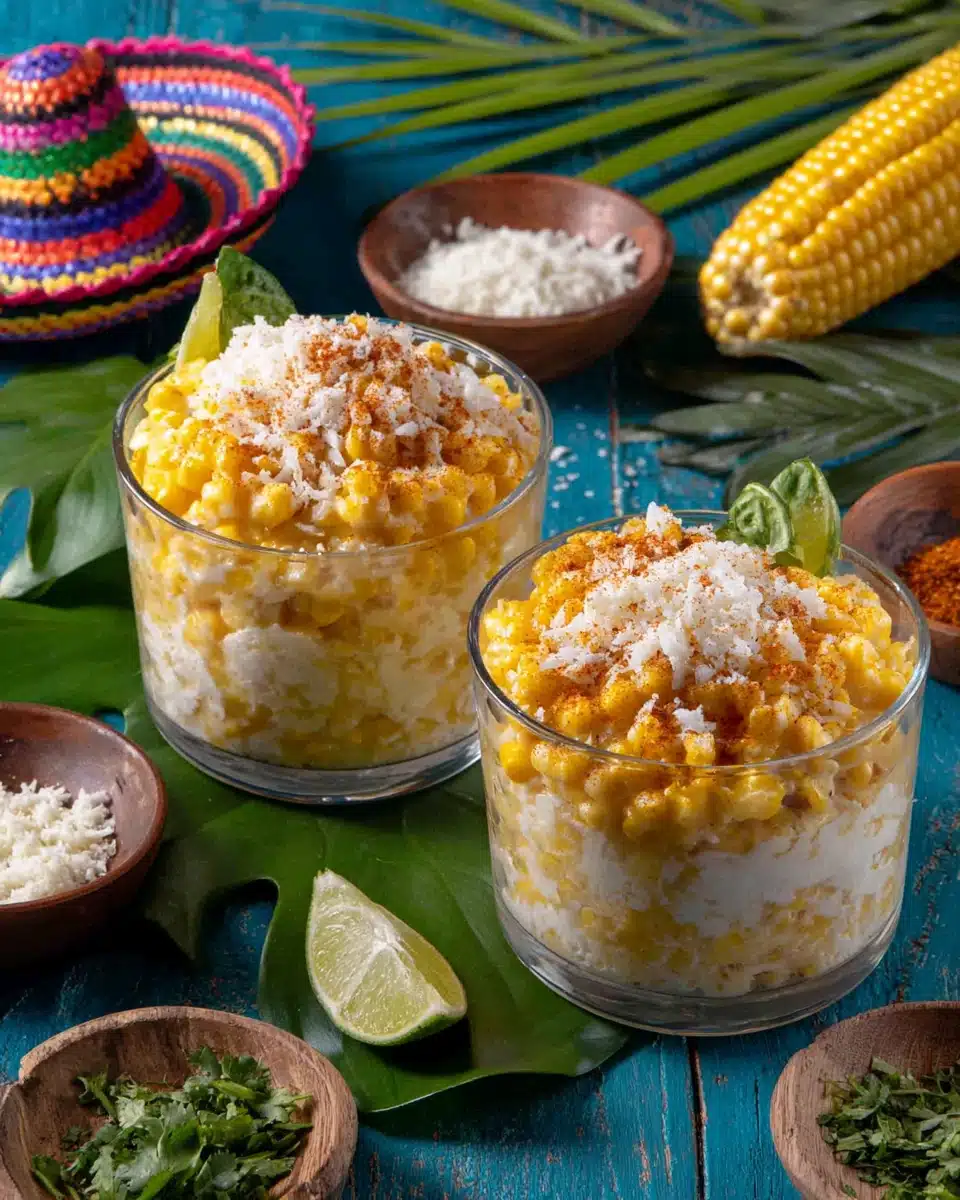
What are Esquites?
Esquites are a popular Mexican snack made from white corn kernels served in a cup. Unlike elotes, which are corn on the cob, esquites offer a charming twist with their off-the-cob presentation. They are typically mixed with creamy mayonnaise, tangy lime, and crumbled cheese, resulting in a satisfying blend of flavors and textures that’s both comforting and refreshing.
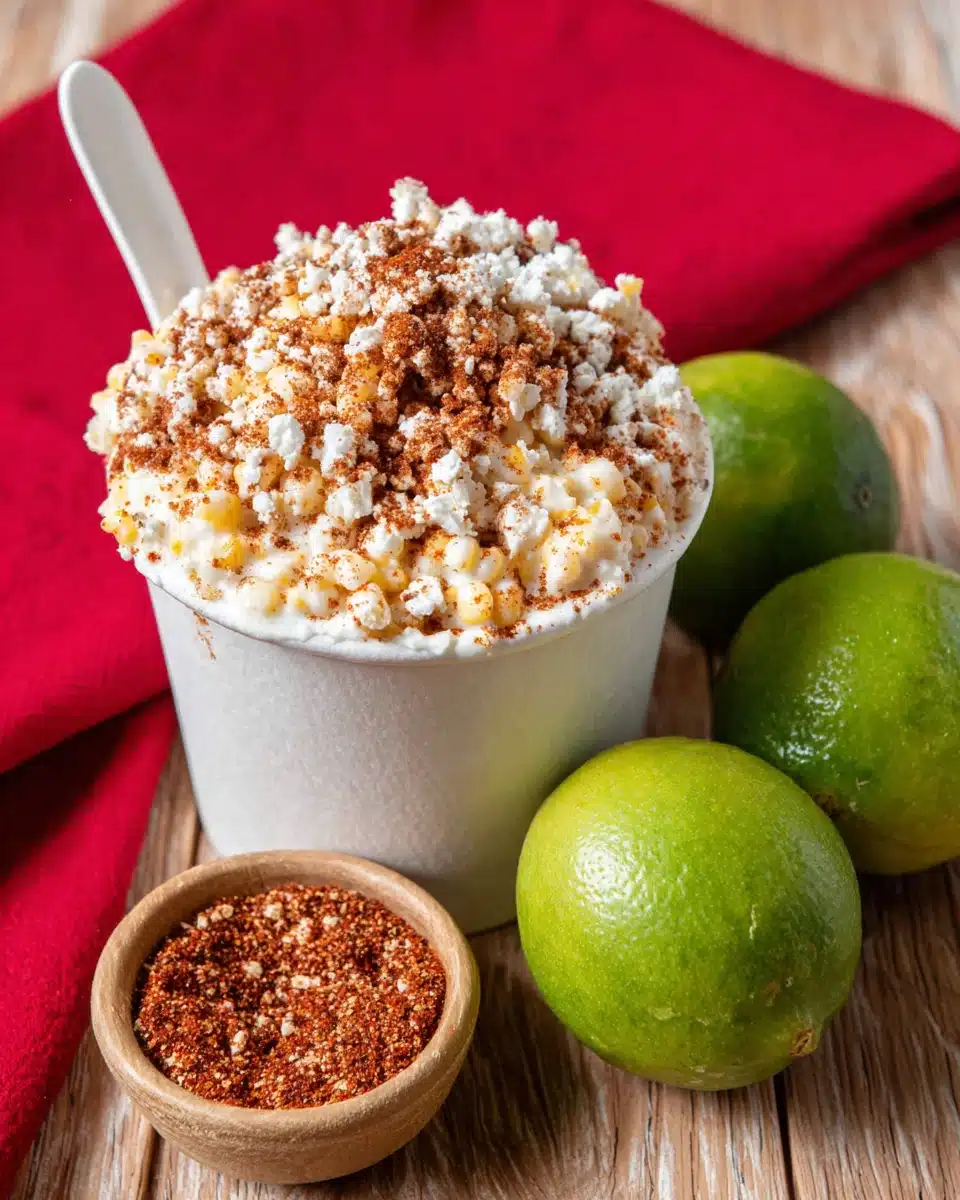
How to Make Esquites at Home
Esquites Ingredients
- 4 cups white corn kernels (fresh, canned, or frozen)
- 2 tablespoons butter
- 2 cups water or chicken broth
- 1 sprig epazote (optional)
- 1/4 cup mayonnaise
- 1/4 cup cotija cheese, crumbled
- 1 tablespoon lime juice
- Chili powder or Tajín, to taste
- Salt, to taste
Step-by-Step Esquites Instructions
- Melt butter in a skillet or saucepan over medium heat.
- Add corn and cook for 5–7 minutes, stirring frequently until slightly toasted and fragrant.
- Pour in water or broth and add the epazote sprig. Simmer uncovered for 10–15 minutes until the corn is tender.
- Remove the epazote and drain any excess liquid.
- Spoon the hot corn into serving cups.
- Stir in mayonnaise, sprinkle with cotija cheese, add lime juice, and dust with chili powder or Tajín.
- Mix thoroughly or layer for a street-style presentation.
- Serve warm with lime wedges on the side.
Tips for Perfect Esquites
For the best flavor, consider using fresh corn when it’s in season. If you’re short on time, frozen fire-roasted corn adds a smoky touch effortlessly. You can substitute mayonnaise with Mexican crema for a creamier texture, or use plain Greek yogurt for a lighter version. Don’t forget that epazote is optional, but it brings an authentic earthy flavor to your esquites!
Esquites vs. Elotes: Understanding the Difference
It’s essential to understand the key difference between esquites and elotes. While elotes are served on the cob and typically eaten with a stick, esquites are off-the-cob kernels served in a cup, making them perfect for sharing at gatherings or enjoying on the go.
Exploring Esquites Regional Variations
Classic Esquites
The classic version is what we’ve covered, featuring corn, mayonnaise, and cotija cheese, seasoned to perfection.
Oaxaca-Style Esquites
In Oaxaca, locals often use quesillo or aged cheese, giving a distinct flavor that’s rich and creamy.
Puebla & Veracruz Esquites
Puebla and Veracruz variations might include fresh cilantro or hierba santa, with Veracruz sometimes adding pickled jalapeños for a spicy kick.
Northern Mexico Esquites
In Northern Mexico, esquites are often topped with grilled corn, asadero, or Chihuahua cheese, enhancing the street food experience.
Southern Mexico Esquites
Regions in Southern Mexico may skip the mayonnaise entirely, opting for a more straightforward seasoning approach that lets the corn shine.
Dietary Adaptations for Esquites
Vegan Esquites
For a vegan version, simply replace mayonnaise and cotija cheese with plant-based alternatives. This keeps the dish creamy and satisfying without the dairy.
Low-Fat Esquites
To create a low-fat option, use plain Greek yogurt instead of mayonnaise, and omit the butter for a lighter dish.
Gluten-Free Esquites
Esquites are naturally gluten-free, but always verify any packaged toppings for hidden gluten ingredients.
FAQs
What are esquites?
Esquites are a Mexican street food made from off-the-cob corn kernels served in a cup, typically mixed with mayonnaise, cheese, lime, and spices.
How do you make esquites?
To make esquites, cook corn kernels, mix them with mayonnaise, cheese, lime juice, and spices, and serve warm in cups.
What ingredients are needed for esquites?
You will need corn, butter, water or broth, epazote (optional), mayonnaise, cotija cheese, lime juice, chili powder or Tajín, and salt.
Can esquites be served cold?
Yes, while esquites are traditionally served warm, you can enjoy them cold as a refreshing snack.
What toppings can be added to esquites?
Common toppings include more cheese, lime wedges, chili powder, Tajín, or even pickled jalapeños for a spicy twist.
Related Recipes to Try
- Elote
- Crack Corn Salad
- Street Corn Pasta Salad
- Cook Husked Corn In Microwave
- How To Cook Frozen Corn On The Cob
- Microwave Sweet Corn Husk Off
Conclusion
Esquites are not only a delicious treat but also a beautiful way to embrace Mexican flavors. With variations across regions and easy adaptations for dietary needs, this dish is versatile and satisfying. For a deeper dive into Mexican cuisine, check out some great recipes on Pinterest for inspiration!
Delicious Esquites: A Quick and Flavorful Mexican Treat
Equipment
- skillet
Ingredients
- 4 cups white corn kernels fresh, canned, or frozen
- 2 tablespoons butter
- 2 cups water or chicken broth
- 1 sprig epazote optional
- 1 /4 cup mayonnaise
- 1 /4 cup cotija cheese, crumbled
- 1 tablespoon lime juice
- Chili powder or Tajín, to taste
- Salt, to taste
Instructions
- Melt butter in a skillet or saucepan over medium heat.
- Add the corn and cook for 5–7 minutes, stirring frequently until slightly toasted and fragrant.
- Add water or broth and the epazote sprig. Simmer uncovered for 10–15 minutes until the corn is tender.
- Remove the epazote and drain any excess liquid.
- Spoon the hot corn into serving cups.
- Stir in mayonnaise, sprinkle with cotija cheese, add lime juice, and dust with chili powder or Tajín.
- Mix thoroughly or layer for a street-style presentation.
- Serve warm with lime wedges on the side.
Notes
– Frozen fire-roasted corn can be used for a smoky flavor shortcut.
– Mexican crema can substitute mayonnaise for a smoother texture.
– Vegan adaptation: Use plant-based mayo and cheese.
– Low-fat adaptation: Use plain Greek yogurt instead of mayonnaise.
– Lighter version: Use light mayo, omit butter, reduce cheese.
– Gluten-free: Naturally gluten-free; verify packaged toppings.
– Regional variations: Oaxaca may use quesillo or local aged